
Sardinia or Sicily: where is the water clearer?
Underwater visibility is not decided by the island but by the seabed and what runs into the sea. The mechanism explained properly — including what Sicily does better.
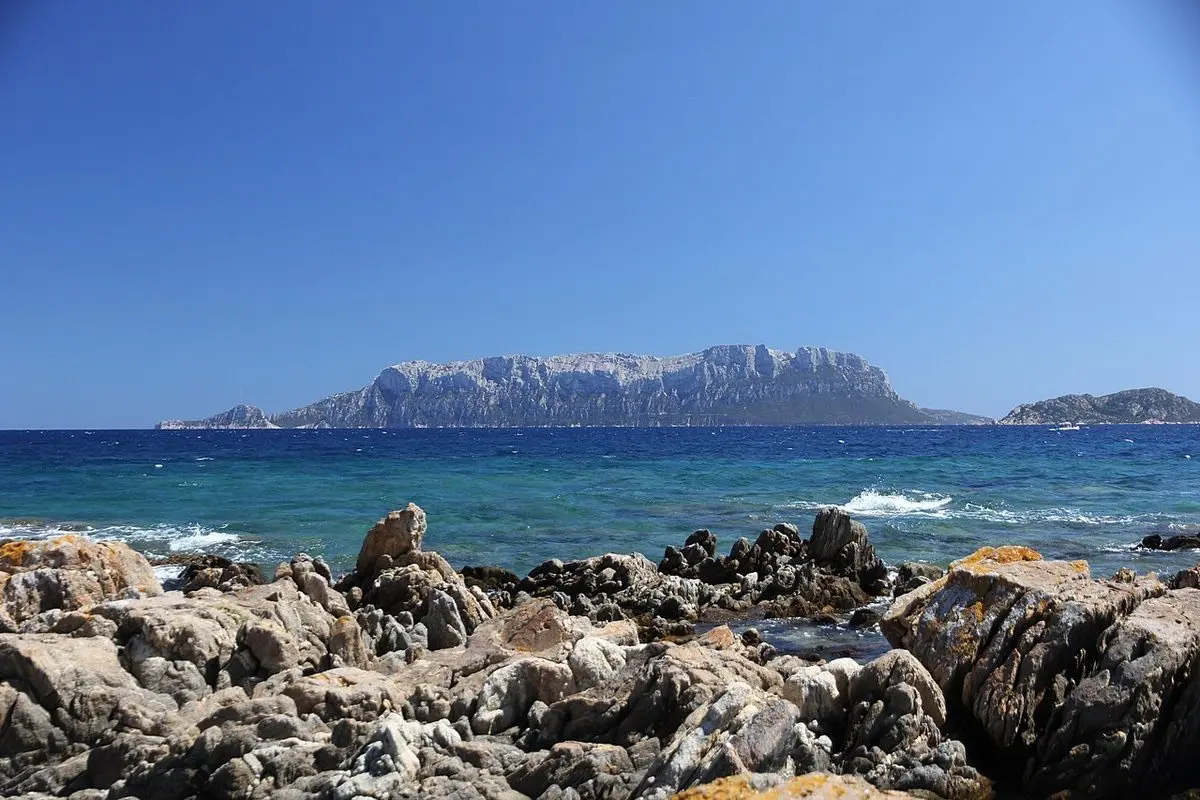
The short answer
- Averaged over long stretches of coast: Sardinia, for geological reasons rather than taste.
- The real reason is posidonia: the meadows bind the sand that would otherwise hang in the water.
- For a single outstanding spot, Sicily has Ustica, Italy’s first marine protected area.
What makes water cloudy
Visibility is not a property of the sea but a question of what is suspended in it: resuspended sediment, freshwater carried in by rivers, and plankton blooms. All three depend on what happens on land and what the seabed is made of.
So “which island has clearer water” is really: which seabed produces less fine particulate, and how much land gets washed into the sea.
Why Sardinia starts ahead
Much of the Sardinian coast is granite — the pink rock of Gallura, the boulders of the Costa Smeralda. Granite breaks down into coarse grains that settle again quickly, not into fine silt that stays suspended for hours.
On top of that, the island has no large rivers with meaningful discharge. Where no river reaches the sea, no clay does either, and after rain the turbidity stays local and short-lived.
Posidonia is the real reason
Posidonia oceanica is not an alga: it is a flowering plant with roots, endemic to the Mediterranean, growing on Sardinian sandy bottoms from the surface down to around 40 metres.
For visibility it is decisive: the meadows stop sediment being lifted off the bottom, they stabilise the substrate, and the leaves filter suspended particles out of the water.
And it is both cause and indicator: because it needs clear water for its own photosynthesis, a healthy meadow is treated as an indicator of good water quality. Where there is a lot of posidonia the water is usually already clear — and stays that way.
What Sicily brings to the table
An article pretending Sicily has nothing would be dishonest. Ustica is Italy’s first marine protected area, established in 1986 alongside Miramare near Trieste, covering around 16,000 hectares.
The volcanic island offers something Sardinia does not have in that form: vertical lava walls immediately below the surface, and at Punta Gavazzi an underwater archaeological trail whose shallower section is open to snorkellers.
Put differently: Sardinia wins on breadth, Sicily wins at a point. If you want a week of entering a different clear cove every day, Sardinia is the safer bet. If you want one exceptional spot, go to Ustica.
On any given day the wind decides anyway
All of this holds on average. On a specific day the wind matters more than the island: an onshore wind lifts the bottom even over granite and posidonia, and turns the clearest cove milky.
In practice: rather than choosing the island, choose the side of the coast. Sardinia is narrow enough that the leeward side is almost always within reach.
Frequently asked questions
Is the water really clearer in Sardinia than in Sicily?
Averaged over long stretches of coast, yes, and for geological reasons: granite rather than fine sediment, almost no river input, and extensive posidonia meadows that hold the seabed down. At individual spots Sicily matches or beats it.
What is posidonia and why is it on the beach?
A flowering plant endemic to the Mediterranean, not an alga. Washed-up leaves are not dirt: they signal a healthy meadow offshore and protect the beach from erosion.
Where is visibility best in Sardinia?
Over rocky ground with posidonia and away from river mouths: the areas around Tavolara, Capo Carbonara and Capo Caccia are among the most reliable.
What ruins visibility on a single day?
An onshore wind. It lifts the bottom even where the water is usually glass-clear. Switch to the other side of the coast rather than to another beach on the same side.