
 Marine Protected Area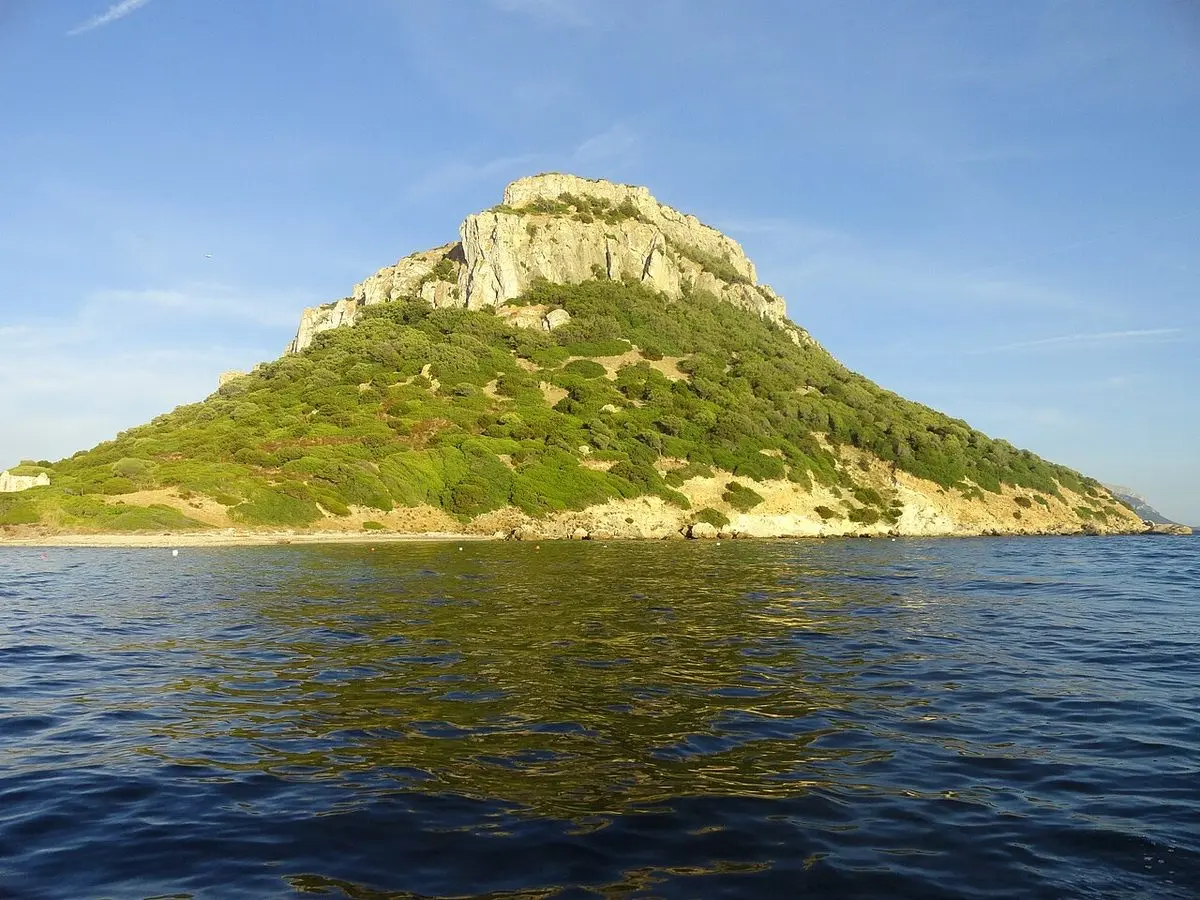
Dolphin gulf
Figarolo Islet
The limestone cone of the Gulf of Olbia, between mouflons and dolphins
Golfo Aranci · North-East
- DifficultyIntermediate
- AccessBy boat
- SeasonJune – September
- SeabedLimestone walls and gravel
At a glance: Intermediate difficulty, access by boat. Recommended season: June – September. Seabed: limestone walls and gravel.
What you will see
- Frequent bottlenose dolphin sightings in the gulf
- Steep walls, full of life
- Mouflons visible on the islet’s slopes
- Can be combined with dolphin watching
Conditions today
Reading the sea…
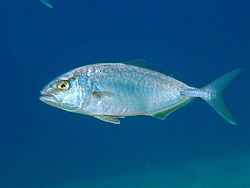
Chance of an encounter*


The guide
Figarolo is the cone-shaped islet that closes the gulf of Golfo Aranci. Its slopes host a small colony of mouflons, while the surrounding waters are known for a resident population of bottlenose dolphins, which many trips combine with a snorkelling stop.
Underwater the islet drops away more sharply than the beaches along the coast: the limestone walls and gravel ledges hold damselfish, sea breams and saddled bream, with good visibility just metres below the surface.
The spot suits those already comfortable with a mask: the water is deep straight away and you can only get out via the boat. Trips leave from Golfo Aranci harbour and usually last half a day.
Frequently asked questions
How do you get to Figarolo islet?
By boat only: trips leave from Golfo Aranci harbour and usually last half a day.
Is Figarolo suitable for beginners?
It suits those already comfortable with a mask: the water is deep straight away and you enter and exit only from the boat.
Do you really see dolphins?
The gulf hosts a resident population of bottlenose dolphins and sightings are frequent, though never guaranteed: many trips combine dolphin watching with a snorkelling stop.
Plan your trip
The tours in detail
Learn more
Blog Useful reads for this area
Keep exploring
Other spots
Marine Protected Area Marine Protected Area
Capo Carbonara
* The encounter percentages are indicative estimates, worked out by combining each species’ typical habitat with the characteristics of the spot. They are not survey data: whether the fish are actually there depends on the season, the weather, the time of day, sea conditions and, not least, a bit of luck. Always respect marine life and the rules of protected areas.