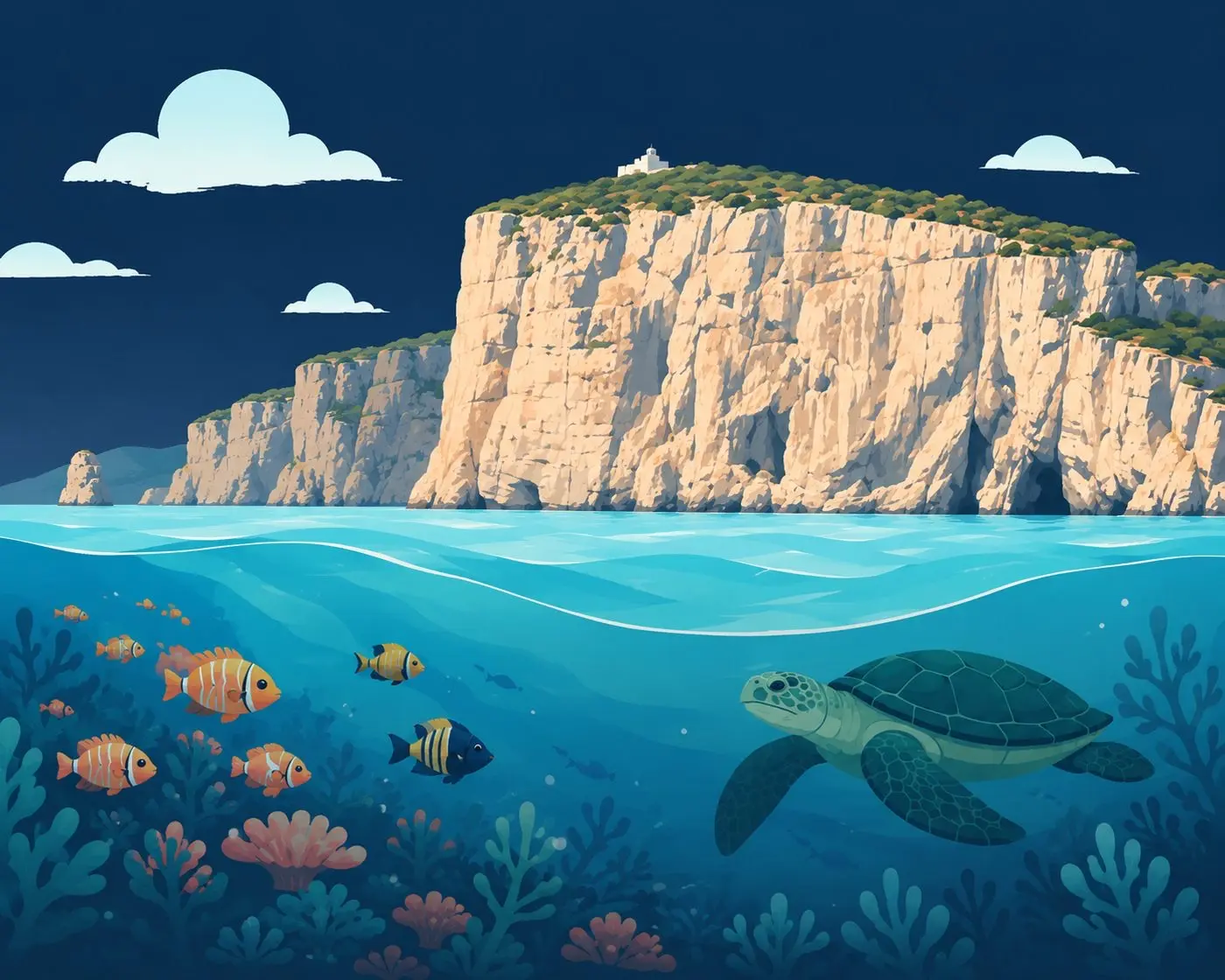
From the surface to the first few metres: duck diving for snorkellers
The duck dive, equalising, the buddy rule: how to drop two or three metres safely to look a grouper in the eye — and what never to do.
Sooner or later it happens to everyone: from the surface you spot a den, a shadow under a boulder, a grouper hanging still three metres down — and you want to go. The step from snorkelling to your first breath-hold dive is natural and wonderful, but it needs method: the first few metres are exactly where pressure changes fastest.
The duck dive that doesn’t scare the fish
An efficient descent starts not from the legs but from a 90° bend: torso down, legs straight up out of the water, and their weight pushes you under without a single fin stroke. Fins only start working once they are submerged: total silence, no splash, fish still there.
Before you go: a minute of calm breathing, one full (not forced) inhale, and down. Never hyperventilate: fast deep breaths delay your urge to breathe without adding oxygen — which is how people feel “great” until a metre from the surface, where nearly all breath-hold blackouts happen.
Equalise early, equalise often
Ear pain is not something to “push through”: it is something to prevent. Equalise from half a metre down — nose pinched, a gentle push towards the ears — and repeat every metre or so, before you feel discomfort. If one ear won’t open, come up half a metre and try again; if it still won’t, the dive ends there. Colds and equalising don’t mix: with a blocked nose, you stay on the surface.
The rule that is not negotiable
Breath-hold diving is done in pairs: one down, one watching at the surface — always, even for “just two metres”. Your buddy holds the buoy, counts your seconds and watches you especially in the last metres of the ascent and the ten seconds after surfacing, when a blackout is most likely. Statistically the danger of freediving is not depth: it is being alone.
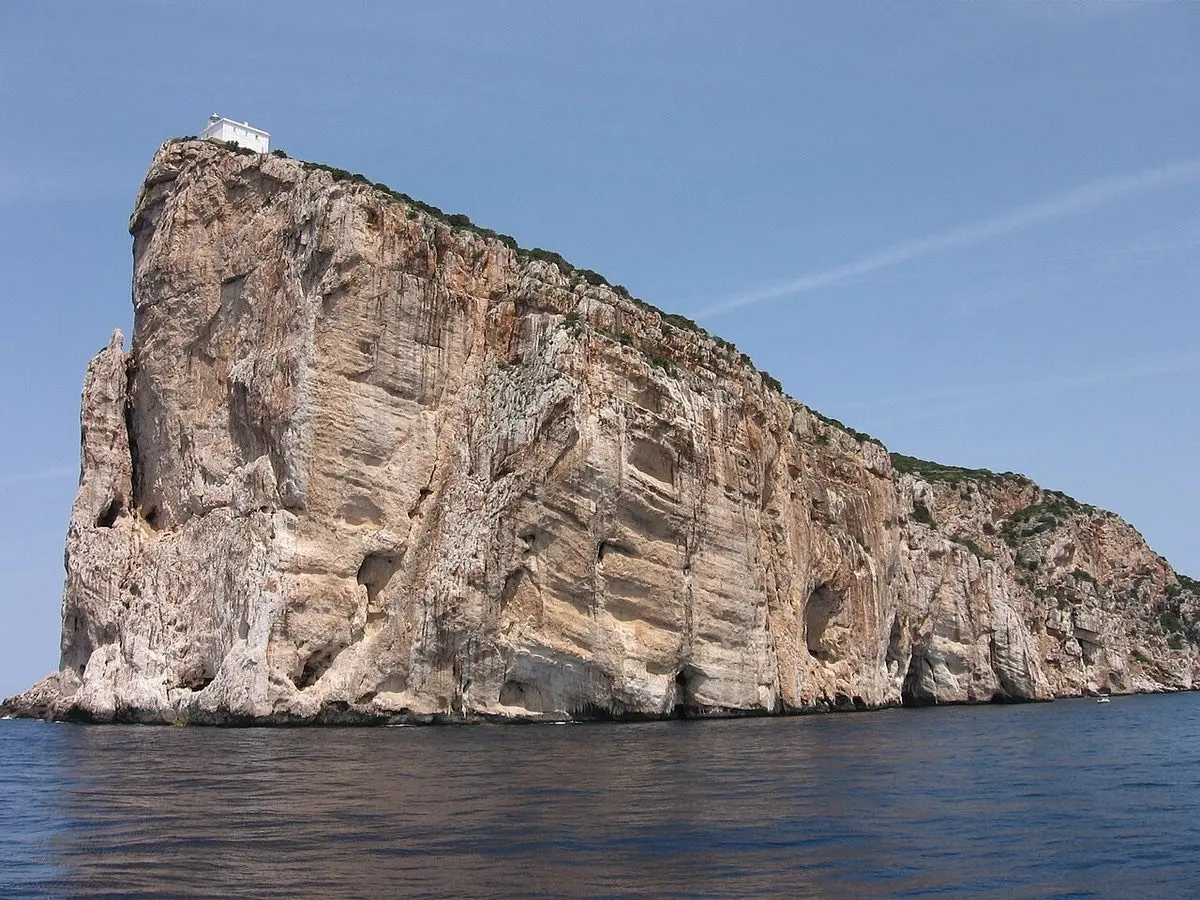
With these basics, there is no shortage of places where the first vertical metre is worth the trip: the walls of Capo Caccia, the ledges of Figarolo, the blue of the Baunei coast. Two metres under the surface there is another sea.