
 Marine Protected Area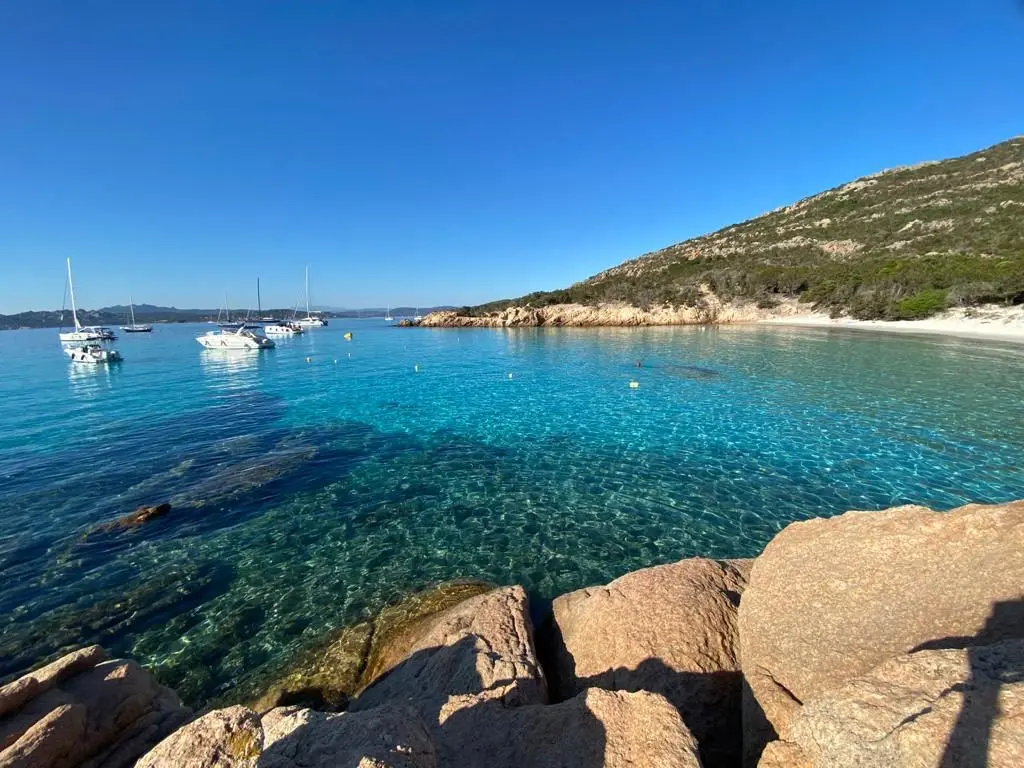
National Park
La Maddalena Archipelago
Granite coves and clear water in the park between Sardinia and Corsica
Palau · North-East
- DifficultyEasy
- AccessBy boat
- SeasonMay – October
- SeabedGranite and brilliant white sand
At a glance: Easy difficulty, access by boat. Recommended season: May – October. Seabed: granite and brilliant white sand.
What you will see
- Some of the clearest water in the Mediterranean
- Cala Corsara on Spargi and its natural pools
- Granite boulders sculpted by the wind
- Budelli’s Pink Beach, visible but off-limits
Conditions today
Reading the sea…
Chance of an encounter*


The guide
The archipelago has been a National Park since 1994: sixty-two granite islands and islets between Gallura and the Strait of Bonifacio. Trips leave from Palau or La Maddalena and take in Spargi, Budelli and Santa Maria in a day.
For snorkelling the highlight is the sheltered coves of Spargi, such as Cala Corsara: white sand and granite boulders just metres down, with water so clear it is hard to judge the depth. Sea breams, damselfish and wrasse move among the rocks.
One warning that matters: Budelli’s Pink Beach has been off-limits to landing and swimming since 1994, to protect the sediment that gives it its colour. You admire it from the boat. The park is strictly zoned: authorised trips know where getting in the water is allowed.
This spot lies within a Marine Protected Area: zoning restricts swimming and boating in some stretches. Rely on authorised operators and check the managing body’s current rules.
Frequently asked questions
How do you visit the La Maddalena archipelago?
On boat trips leaving from Palau or La Maddalena: in a day they take in Spargi, Budelli and Santa Maria with swim and snorkel stops.
Can you swim at the Pink Beach?
No: Budelli’s Pink Beach has been closed to landing and swimming since 1994 and can only be admired from the boat.
Which cove is best for snorkelling?
Cala Corsara, on Spargi: white sand, granite boulders just metres down and water clarity among the best in the Mediterranean.
Plan your trip
The tours in detail
Learn more
Blog Useful reads for this area
Keep exploring
Other spots
Marine Protected Area Marine Protected Area
Capo Carbonara
* The encounter percentages are indicative estimates, worked out by combining each species’ typical habitat with the characteristics of the spot. They are not survey data: whether the fish are actually there depends on the season, the weather, the time of day, sea conditions and, not least, a bit of luck. Always respect marine life and the rules of protected areas.