Jellyfish in Sardinia: which ones, where and what (actually) to do if stung
The mauve one that stings, the harmless “fried egg”, the by-the-wind sailor that isn’t a jellyfish at all: recognise them at a glance, and the right protocol after contact — no ammonia, no myths.
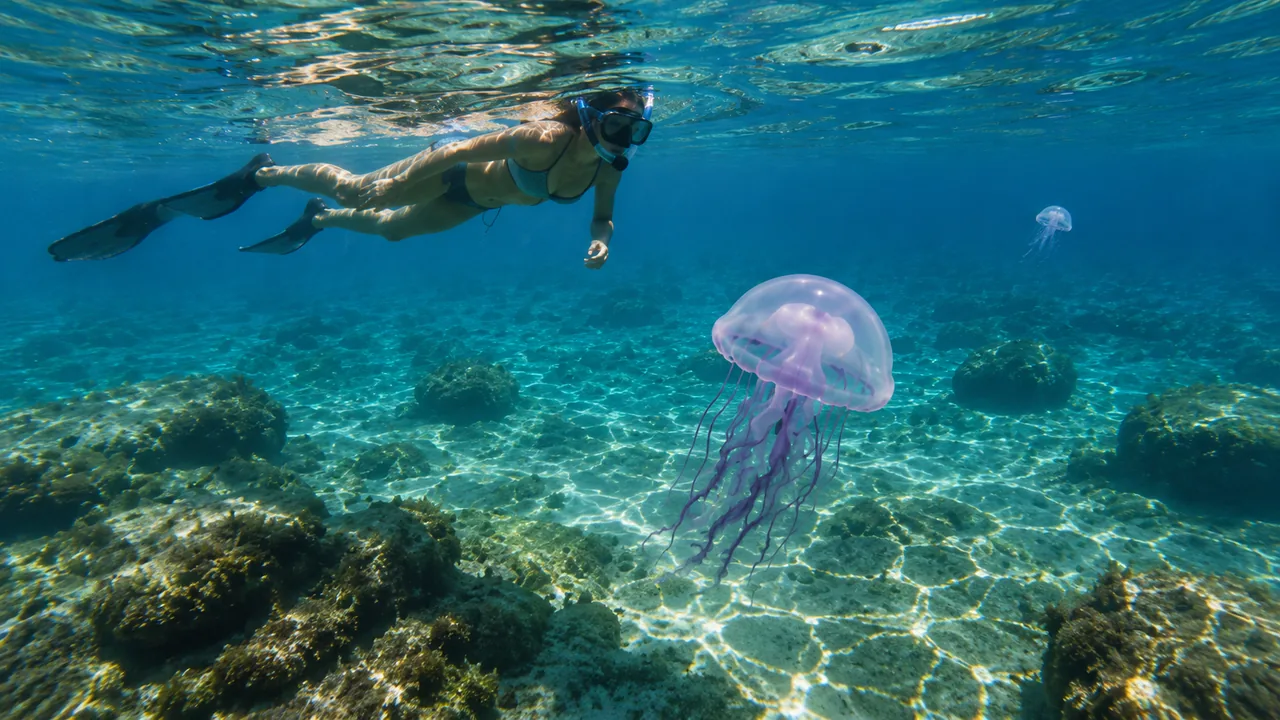
Are there jellyfish in Sardinia right now?
- Most days, most beaches: no jellyfish at all — they come in patches, not seasons.
- The only one to watch is the mauve stinger; it drifts in with the wind and is gone in a day or two.
- Rule of thumb: check where the wind blows to — swarms pile up on downwind shores.
Indicative chance of mauve-stinger patches, based on Western Mediterranean seasonality.
Reading the wind…
Pelagia does not swim. The wind carries it.
The most stinging jellyfish in the Mediterranean simply drifts at the surface: the rose sets itself on the wind blowing over Sardinia right now and shows where the drift piles up. Turn it by hand to try other conditions.
—
How long it has been blowing
Leeward coast — they pile up here
Windward coast — pushed offshore
Next 48 hours — where the drift is heading
Method, sources and limits
Wind: Open-Meteo, offshore point on the west coast (40.3°N 8.05°E), updated every 15 minutes. Coastline: OpenPolis / ISTAT, simplified. Exposure is computed from the real orientation of each stretch of shore.
This is a heuristic for passive surface transport, not a validated model: local currents, bay morphology and coastal breezes can turn the picture upside down. Always check on site.
It is the most-clicked search of the summer, second only to the weather: “jellyfish today?”. The truth is less dramatic than the headlines: in the Sardinian sea the unpleasant encounters come down to a few species, almost all recognisable at a glance — and snorkellers start with an advantage: with a mask you see them long before someone swimming eyes-shut.
The three you should know by sight
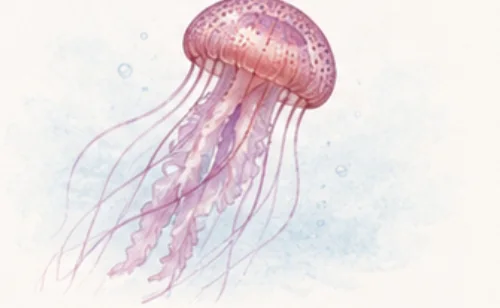
The mauve stinger: small, pink-violet, speckled, with long thin tentacles. The only genuinely stinging one among the common species — it arrives in swarms, carried by currents and wind: if you see two, assume twenty.
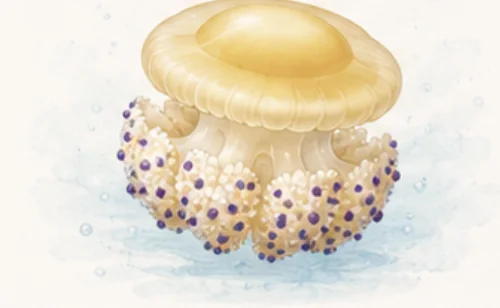
The “fried egg” of late summer: a yellow dome with a tuft at the centre, often escorted by tiny fish. Watch it, photograph it, don’t touch it — out of respect, not danger.
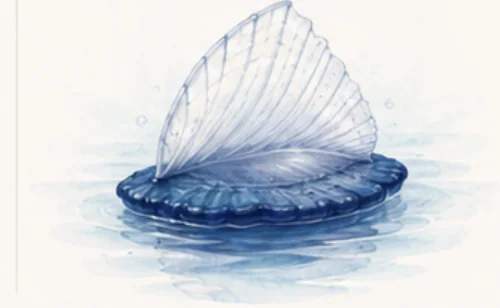
Not even a jellyfish: the blue flotillas blown ashore in spring are drifting colonies, practically harmless to skin.
Where encounters are rarest
Open, current-washed headlands see far fewer patches than closed bays. Three spots where the water is usually clear of them:
The protocol after a sting
If contact happens: get out calmly and rinse only with seawater — never fresh water, which makes the remaining stinging cells fire. Lift off any filaments with the edge of a rigid card, not with your fingers. Then the thing that works: heat (warm sand, warm seawater) or an astringent gel from the pharmacy.
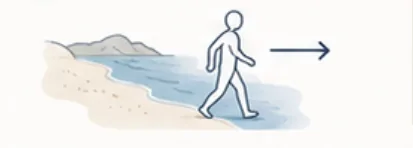

Myths to retire: no ammonia, no urine, no alcohol — they only irritate. Strong burning fades in 10–20 minutes; if general symptoms appear (breathing difficulty, spreading reaction, feeling unwell) it is a case for emergency services — rare, but worth knowing.
The sting-proof kit
 Rash guard / lycraCovers 90% of exposed skin — the single most effective habit. The long-sleeved Cressi.See on Amazon →
 Sting relief wipesPocket-sized single-use wipes that work on jellyfish stings too — made for the beach bag.See on Amazon →
 Safe Sea anti-jellyfish lotionA lotion that inhibits stings before they happen — wear it like sunscreen.See on Amazon →
Living with them as a snorkeller
Two habits cut encounters almost to zero: check the downwind side (mauve stingers pile up where the wind pushes, often in the “sheltered” corner of the bay) and wear a rash guard, which covers 90% of exposed skin. And if the swarm is there, the right choice is the simplest: change cove. The wind that brought them today will take them away tomorrow.
Snorkel with a skipper who reads the water
Local guides know which side of the headland is clear today: small-group snorkelling tours in the marine protected areas, free cancellation on most.
Prices and availability on Viator. Blulume may earn a commission, at no extra cost to you.Frequently asked questions
Are there jellyfish in Sardinia?
Yes, but far fewer than the headlines suggest: on most beaches, most days, you will meet none. The mauve stinger appears in wind-driven patches for a day or two, mainly July to September.
Which month is worst for jellyfish in Sardinia?
August has the highest chance of mauve-stinger patches, followed by July and September. Spring brings harmless by-the-wind sailors ashore instead.
Are Sardinian jellyfish dangerous?
No species in Sardinian waters is life-threatening for a healthy adult. A mauve-stinger sting burns for 10–20 minutes; see a doctor only if general symptoms appear.
Should you pee on a jellyfish sting?
No — it is a myth. Urine, ammonia and alcohol only irritate the skin. Rinse with seawater, lift off filaments with a rigid card, then apply heat.